


At Mingsin Trailer Sales, we're proud to say that our service doesn't stop with your purchase. In fact, our support continues long afterward. This includes free inspections and efficient warranty work. With a wide variety of extensive inventory, we can help you find the right trailer for the right haul, right now.

Mingsin is a reputable supplier in China's agricultural trailer industry, specializing in producing and supplying micro-tiller trailers, hand tractor trailers, and tractor trailers. We invite domestic and international trailer dealers, importers, and end users to reach out to us to discuss agricultural trailer opportunities. Our high-quality products, along with our comprehensive and attentive service capabilities, are sure to meet your diverse needs.

Agricultural trailers are essential in the agricultural industry. They are used for a variety of tasks, including transporting crops, equipment, and even livestock. There are different types of agricultural trailers designed for specific types of cargo. In this article, you will learn about the various types of agricultural trailers and their uses.
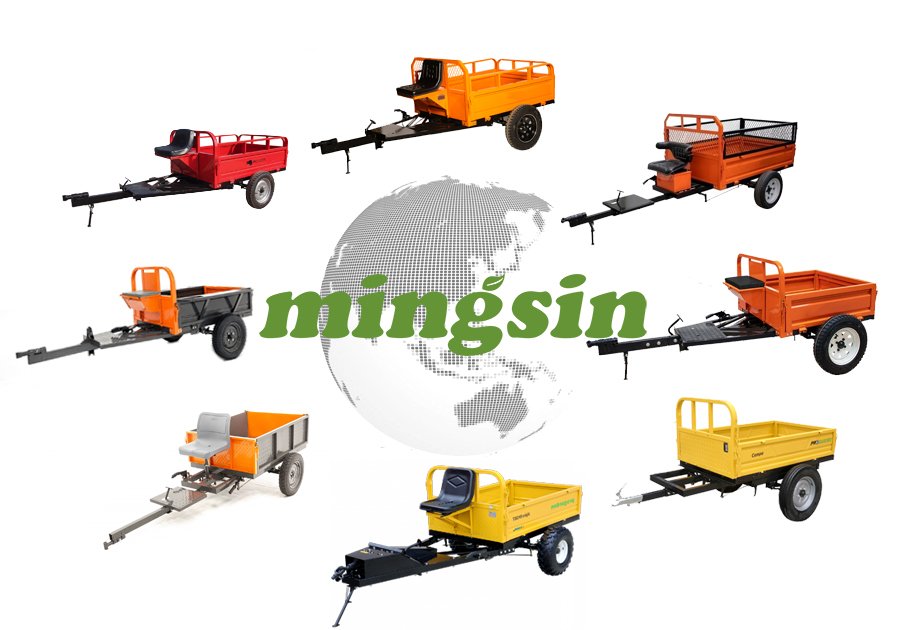
If you are looking for agricultural trailers and you have a motor cultivator, see which is the best motor cultivator trailer. A motor cultivator can have a cardan shaft, traction connected to the power take-off (4×4), a steering wheel, or even a system with tipping and braking. They can vary in size (small or large) and maximum load, being 350, 500, 700, 800, 1000 or 1500 kg. If you want offers on the best trailers for motor cultivators, we help you with recommendations, opinions, and prices for a cheap and good trailer. Let's see for example the MINGSIN motor cultivator trailer.

Mingsin Tractor has been in the tractor business since 1996, and we are here to guide you through the buying process to ensure that you find the right tractor for your needs.

1. What is a Walking Tractor? 2. Advantages of Walking Tractors. 3. Ease of Use and Maintenance. 4. Considerations for Choosing a Walking Tractor. 5. Availability of Spare Parts and Servicing. 6. Tips for Optimal Use and Maintenance.

The definition of walking tractor, what is a walking tractor, why is a walking tractor.

Preparations before starting the engine for the first time. In this video, we show you how to bleed the air out of the oil pump and oil pipe.

A walking tractor, also known as a two-wheel tractor, is a self-propelled, single-axle tractor that's used for a variety of agricultural and gardening tasks

Please fill in your information and let us get in touch with you
Copyright © 2024 QINGDAO MINGSIN TRADE CO., LTD. All Rights Reserved.
 Powered by HiCheng